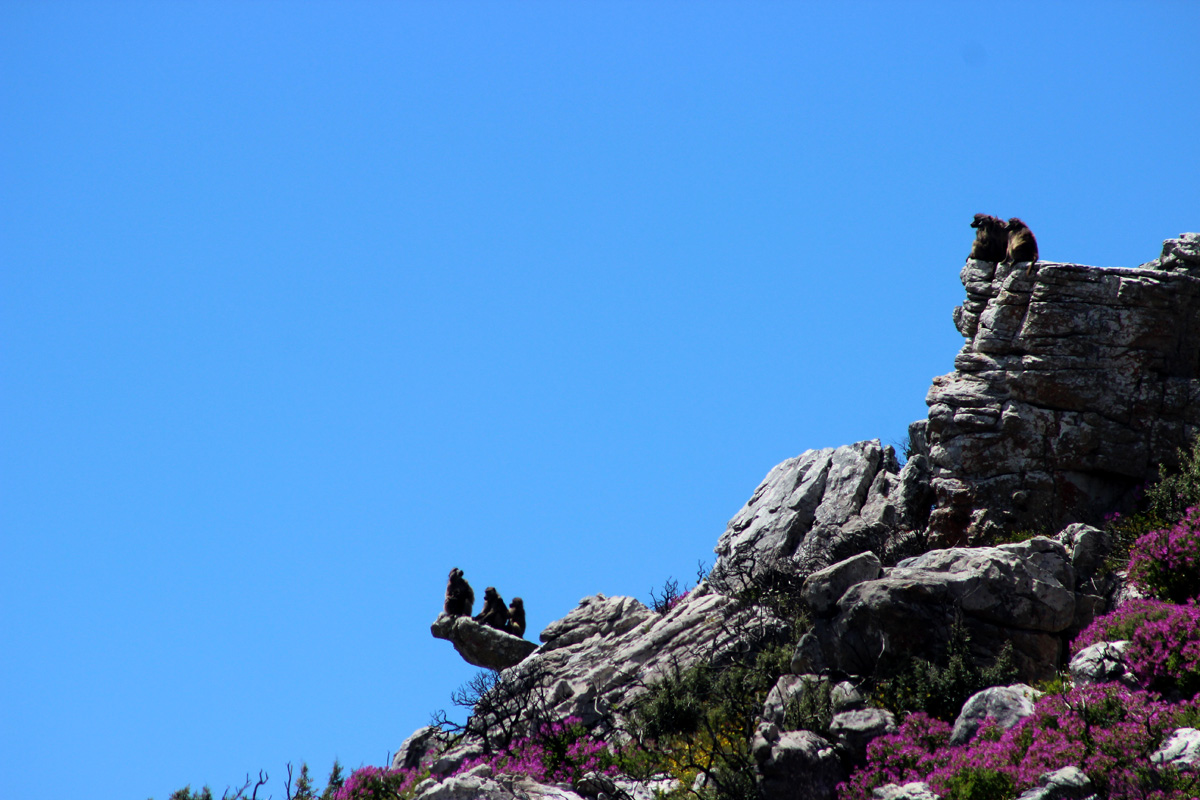
Cape Point Chacma Baboons: Thrilling Encounters with Nature’s Strategists
The Cape Point Chacma baboon (Papio ursinus), also known as the Cape baboon, is not just another Old World monkey. It’s a creature of power, intelligence, and complexity. Measuring up to 115 cm in body length and weighing between 15 and 31 kg, the Chacma is among the largest and heaviest baboon species. With their dark brown to grey fur and a rough patch of hair on their nape, they carry a rugged charm that commands attention.
But don’t let their looks deceive you. These baboons are full of surprises. Unlike their northern relatives—the Guinea, Hamadryas, and Olive baboons—Chacma males lack a mane. Instead, they boast a long, downward-sloping face and canine teeth that can reach a jaw-dropping 2 inches—longer than those of a lion! And with a marked sexual dimorphism, the males tower over the females, adding to their imposing presence.
A Society of Strategy and Survival
Chacmas live in intricate social groups where strategy and hierarchy dictate survival. Most troops include multiple males, females, and their young, though smaller groups with a single dominant male and several females are not unheard of. Female ranking is inherited and stable, while males face constant power struggles to maintain dominance. This high-stakes social ladder keeps every baboon on edge, especially since infanticide often follows the rise of a new male leader—a stark reminder of the brutal realities of nature.
Unlike many other baboon species, Chacmas form their strongest bonds between unrelated males and females, not same-sex relationships. Their communication is a rich tapestry of body language, facial expressions, vocalizations, and touch. It’s a dynamic, ever-evolving social network that keeps the troop functioning, even in the face of threats.
Face-to-Face with the Cape’s Clever Troops
Encountering Chacma baboons at Cape Point is an experience you’ll never forget. These intelligent creatures are masters of body language, and they’re watching you just as much as you’re watching them. Their sharp eyes miss nothing, and your body language speaks volumes. Feeling unsure or scared? They’ll pick up on it in an instant. And if your attempts to “chase them off” seem half-hearted? Forget it—they’ll stand their ground.
Here’s the thrilling part: what some might call “aggression” is often nothing more than confidence on their part. A baboon staring you down isn’t necessarily threatening; it’s calculating. Your response will determine the outcome of this silent standoff.
Winning the Standoff: Mastering Your Body Language
When facing Chacma baboons, the key is confidence—yours. Stay calm, focused, and deliberate. These creatures respect clarity and strength of intention. Here’s how to turn the tide in your favor:
- Plan Your Move
Don’t rush. Take a moment to decide what you’re going to do and how you’re going to do it. A clear plan helps you stay composed and sends the message that you’re in control. - Command with Confidence
Use a firm, steady voice. You don’t need to yell or scream—just sound authoritative. Your tone can speak louder than words. - Own the Space
Stand tall. Shoulders back, head high. Make yourself look as large and dominant as possible. These intelligent creatures will read your posture as a signal of strength.
Remember, the baboons are strategists, but so are you. With a calm demeanor and clear actions, you can navigate these encounters like a pro. The next time you cross paths with a Cape Point Chacma baboon, you’ll be ready for the thrilling dance of confidence and strategy. After all, in the wild, it’s not just survival of the fittest—it’s survival of the smartest.